
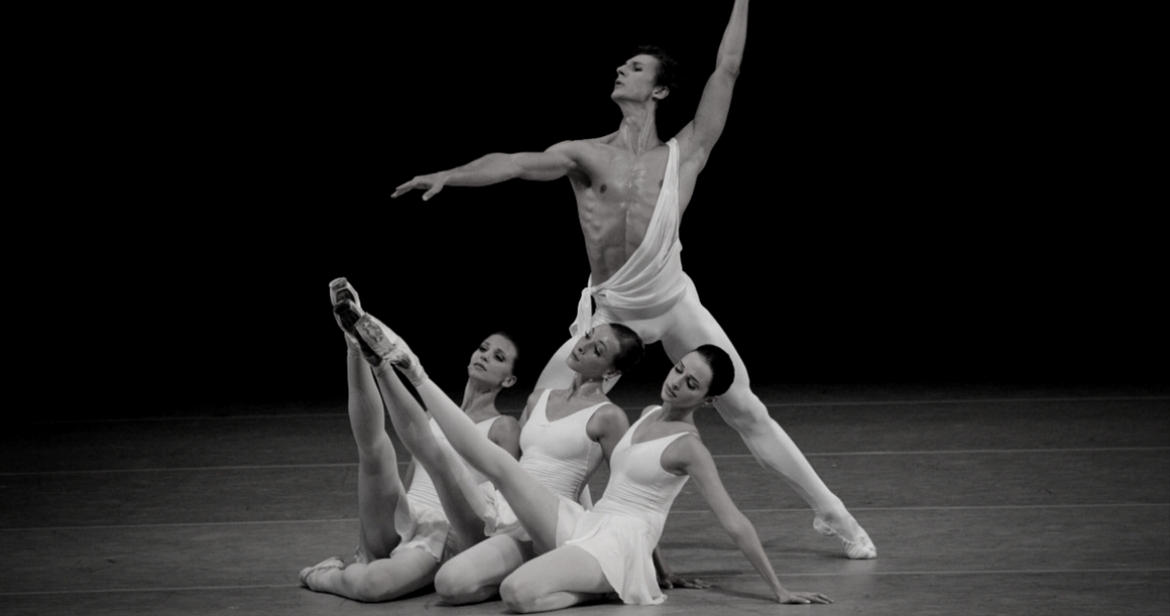
APOLLO MUSEGETE
Primo arrangiamento coreografico : Adolph Bolm
Musiche: Igor Stravinskij
Prima Rappresentazione: 1928 Washington
Successivo arrangiamento coreografico: George Balanchine, Parigi 1928
La versione più conosciuta e rappresentata è quella creata da Balanchine espressamente per i Balletti Russi di Diaghilev, versione che ha condotto alla notorietà e successo tale balletto. L’opera e divisa in due quadri e rientra nella tipologia neoclassica dei balletti. Il balletto, ispirato ad un soggetto mitologico, è ambientato in un’isola dell’Egeo, Delo, unico luogo in cui la povera Leto trova rifugio per dare alla luce il figlio della divinità Zeus che chiamerà Apollo. La particolarità di quest’ultima divinità è che appena nato ha già le sembianze di adulto, per cui svincolatosi dalle bende riceve, in dono da due divinità, un liuto. Convoca a sé le tre muse che rappresentano l’arte Calliope, Polimnia e Tersicore e comincia ad insegnare loro, ciascuna nella propria arte, la disciplina che singolarmente rappresentano, diventando, di fatto il loro Maestro. Dunque, danza e suona insieme alle tre Muse e consegna alla prima Calliope, dea della poesia, una tavoletta, alla seconda Polimnia, divinità della mimica, una maschera e per finire a Tersicore, dea della danza, una lira. In realtà tra le tre, soltanto quest’ultima riuscirà così bene ad apprendere ed a seguire gli insegnamenti di Apollo da ottenere le sue lodi. Tutte le Muse guidate da Apollo si dirigono verso il Monte Parnasso, in questo modo si separa definitivamente dalla madre Leto.




When I take a trip to the coast, what I look forward to is getting some proper peace and quiet. Once I sort out all the gear, I often get quiet periods with nothing but the water moving. As I wait for some action, I usually pour a coffee from the thermos and head over to Vegazone Casino using my handheld. It becomes something simple to do while avoiding taking my attention completely off the water. The mobile interface is well suited to smartphones, so I can move between slots with one hand. The biggest advantage is the fact that I can instantly stop what I'm doing whenever the float moves. I don't have to deal with cables or accessories, which means the setup stays completely simple. On days when the fishing spot is far from town, the menus feel responsive, as opposed to becoming frustrating. It feels genuinely relaxing knowing the entire platform stays available on my phone, so I can have a few spins from the riverbank. Whenever a family member asks me how I pass time on quiet fishing days, I usually point them to https://kometa.bar/, given that it's easier instead of talking through the mobile experience over a long message. As an Aussie, long afternoons on the coast often involve plenty of waiting, so not needing a computer beside the water fits naturally into the day, whether I'm using a new smartphone.